I hated elbowing my way through the MoMA and the Met, and even the Guggenheim to an extent. I feel like it’s so peculiar that the artmaking process is such a solitary, singular e
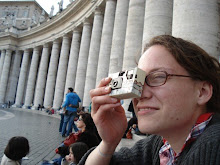
xperience – it’s usually (at least in the western world) one person, alone in a studio, creating -- yet once the art is finished it is, if it’s lucky, placed in a crowded, labyrinthine museum where people get themselves lost in complex floorplans. What’s more, in the bigger museums, you get people who are only there because they feel obligated to be there. I saw way too many people walking around with their cameras, stopping in front of a piece only to take a photograph, then swiftly moving on (more on this later though; I had an encounter >:/ ) I feel like this distracts from the art, and puts it on a pedestal, and takes away its relevancy. It’s almost as though it solidifies and entraps it within the art history canon, and you are forced to view the art in terms of an art histry narrative rather than for the charm of the particular piece itself. And this feels to me a diminishing of the work. Plus, the guards are always so protective of the work, asking you to please step away from the painting, etc., and this reinforces this sense of distance between the viewer and the art. The Chelsea galleries provide an intimate, one-on-one interaction with the art that you don’t get in the bigger museums.

I really enjoyed Marcel Dzama’s watercolors. There’s a precision in the paintings. They remind me of Henry Darger’s figures in terms of style, but there’s also often a similar perversity in subject matter and a fantastical, whimsical nature to the drawings. The figures exist in a more existential atmosphere; they seem to be more self-conscious and self-aware. They exist as petite figures, isolated and alone, centered in the vacuous white of the page.
His piece alluding to Duchamp’s late piece Etant Donnes. Both a woman and a man appear in his piece, plus a mischievous fox in the background. The two seem more blissful than Duchamp’s woman; this may be because we can see their faces, and they appear to be serene and blissful. It’s unclear whether they’re sleeping or dead. It seems they are only sleeping, given

those serene expressions. Duchamp’s nude on the other hand is only a body, an expressionless torso. Duchamp's background is so picturesque, it appears as though it could be a Thomas Kincaid painting, if it weren't for the splayed nude in the foreground. The landscape in Dzama's piece is more fantastical than picturesque. I personally feel like I can’t construct a story behind Dzama’s anymore than I can behind Duchamp’s peephole,

but I think the inability to imagine a narrative is part of the piece's success. Maybe it could be a statement into the limitations of our views into the lives of others, or even to ourselves. Duchamp was creating work at the same time as the surrealists -- a time when Freud was really influential. The gas light in Etant Donnes definitely seems to be a Freudian symbol, and the entire piece possesses a nonsensical, dreamlike quality.

No comments:
Post a Comment